
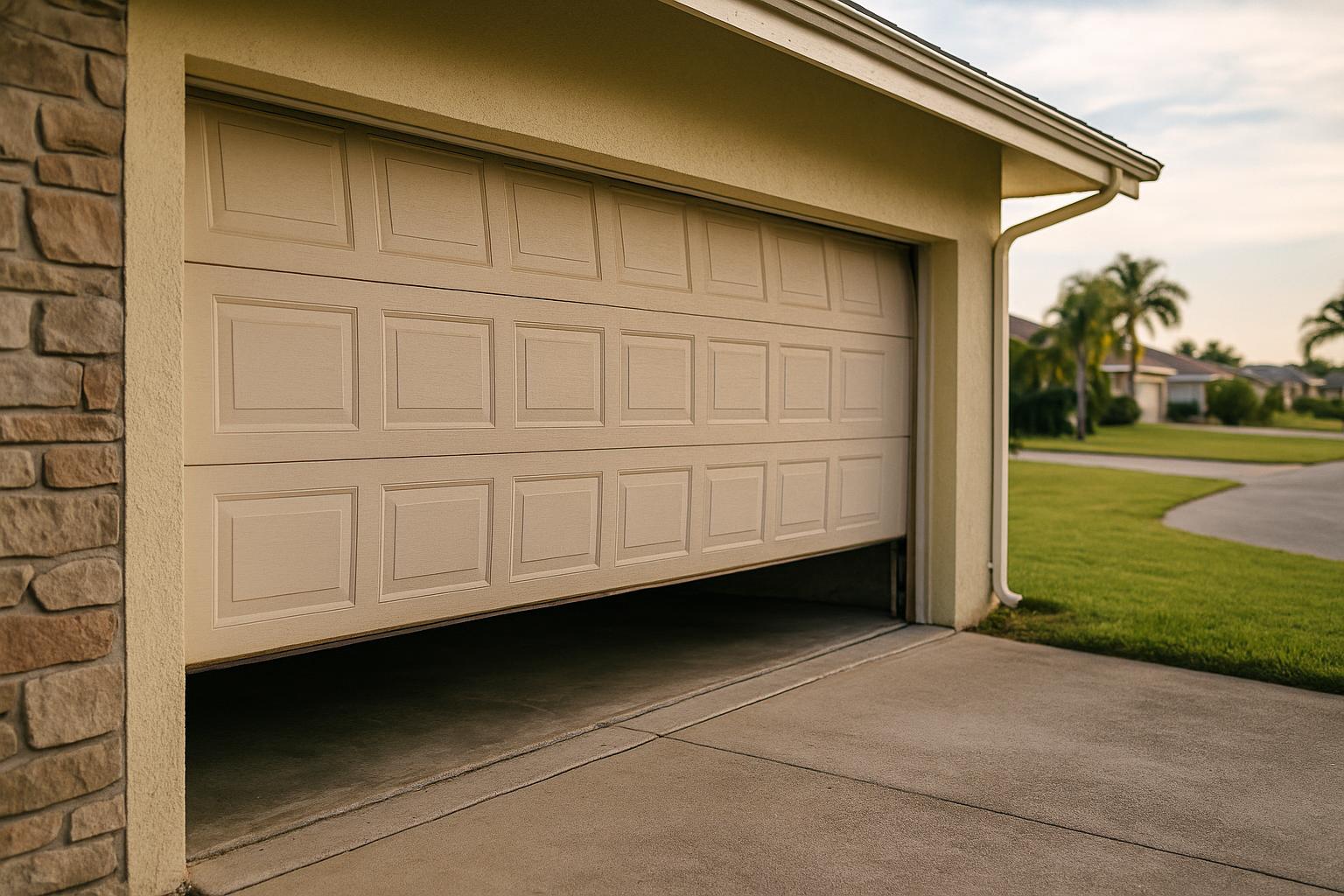
That Frustrating Moment When Your Garage Door Won't Stay Closed
You press the button on your remote, the garage door starts its descent, and then — just before it touches the ground — it reverses and goes right back up. You try again. Same thing. Maybe you try holding the wall button, and it still won't cooperate.
This is one of the most common garage door complaints we hear from homeowners in Virginia Beach, and the good news is that it's almost always fixable. The bad news? There are several possible causes, and diagnosing the right one matters if you want a lasting solution.
Let's walk through the most likely reasons your garage door reverses before closing and what you can do about each one.
1. Misaligned or Dirty Safety Sensors
This is the number one cause of a garage door that reverses before reaching the floor. Every garage door opener manufactured after 1993 is required to have photo-eye safety sensors — small devices mounted near the bottom of your door tracks on each side. They send an invisible beam across the opening, and if anything breaks that beam, the door reverses to prevent crushing a person, pet, or object.
Here's the thing: these sensors don't just react to actual obstructions. They also malfunction when they're:
- Misaligned — Even a slight bump can knock one sensor out of alignment with the other, breaking the beam.
- Dirty — Dust, cobwebs, pollen, and moisture can cloud the lens. Living near the coast in Virginia Beach means salt air and humidity can accelerate this buildup.
- Exposed to direct sunlight — Bright afternoon sun can overwhelm the sensor's infrared beam, causing false readings.
Start by wiping both sensor lenses with a soft cloth. Then check that both indicator lights are solid (not blinking). If one is blinking, it's likely out of alignment. Gently adjust it until the light holds steady.
2. The Close-Limit Switch Needs Adjustment
Your garage door opener has limit switches that tell it how far the door should travel in both directions — up and down. If the close-limit switch is set incorrectly, the opener thinks the door has hit an obstruction when it's actually just reaching the floor. The opener's built-in safety feature then kicks in and reverses the door.
On most openers, the limit adjustment is a small screw or dial on the back or side of the motor unit. Turning it in small increments — usually no more than a quarter turn at a time — can solve the problem. However, if you're not comfortable working with your opener's settings, this is a quick fix for a professional technician.
3. Worn or Broken Springs
Your garage door springs do the heavy lifting — literally. They counterbalance the weight of the door so the opener doesn't have to strain. When springs wear out or lose tension, the door becomes heavier than the opener expects. The motor senses the extra resistance and interprets it as an obstruction, triggering a reversal.
Signs that your springs may be the culprit include:
- The door feels noticeably heavy when you lift it manually
- The door opens unevenly or appears crooked
- You hear loud creaking or popping sounds during operation
- Visible gaps in the spring coils
Important safety note: Garage door springs are under extreme tension and can cause serious injury if handled improperly. Spring replacement is not a DIY job. If you suspect your springs are failing, call a professional.
4. Obstructions in the Track
Sometimes the answer is simpler than you think. Small debris, a pebble, a leaf, or even a buildup of old lubricant mixed with dirt can create enough resistance in the track to trigger a reversal. In the Hampton Roads area, seasonal storms can blow debris into garages, and sandy grit from nearby beaches can work its way into tracks over time.
Inspect both tracks from top to bottom. Look for dents, bends, or any foreign objects. Clean the tracks with a damp cloth and make sure the rollers move freely through them.
5. Damaged or Worn Rollers
Rollers guide your garage door along the tracks. When they crack, chip, or seize up, they create friction that the opener may interpret as resistance. Nylon rollers typically last longer than steel ones, but all rollers wear out eventually — usually after about 10,000 to 15,000 cycles.
If your rollers look worn, cracked, or aren't spinning freely, it's time for a replacement. This is a relatively affordable fix that can make a dramatic difference in how smoothly and quietly your door operates.
6. Issues With the Opener Itself
If you've checked everything above and the door still reverses, the problem may be with the opener's logic board or motor. Electrical surges — not uncommon during Virginia Beach's summer thunderstorm season — can damage circuit boards. An aging motor may also struggle to move the door through its full range of motion.
Opener issues typically require professional diagnosis. A technician can test the motor, inspect the circuit board, and determine whether a repair or replacement makes more sense for your situation.
A Quick Test You Can Do Right Now
Most garage door openers have a force adjustment that controls how much resistance triggers a reversal. Here's a simple test:
- Place a flat piece of wood — like a 2x4 — on the ground in the center of the door's path.
- Press the close button.
- When the door contacts the wood, it should reverse immediately.
- If it doesn't reverse, your force settings are too high, which is a safety hazard.
- If it reverses before even touching the wood, the force may be set too low, or one of the issues above is at play.
This test also helps you confirm that your safety reversal system is functioning properly — something every homeowner should check at least twice a year.
When to Call a Professional
Some of these fixes — cleaning sensors, clearing debris from tracks — are perfectly manageable for a handy homeowner. But others, like spring replacement, opener diagnostics, and track realignment, require specialized tools and experience.
At Virginia Beach Garage Door Pro, we troubleshoot reversing doors regularly for homeowners across Virginia Beach, Chesapeake, Norfolk, and the surrounding communities. We'll identify the root cause, explain your options, and get your door closing properly — usually in a single visit.
If your garage door has been giving you trouble, don't ignore it. A door that won't close is a security risk and an invitation for weather damage, pests, and unwanted visitors. Contact us today to schedule a service call and get your garage door back on track — literally.