
Your Garage Door Springs Are Working Harder Than You Think
Every time you open and close your garage door, the springs do the heavy lifting — literally. A standard residential garage door can weigh anywhere from 130 to 350 pounds, and without properly functioning springs, your opener alone can't handle that load. Springs are under immense tension, and over time, they wear out. When they fail, your garage door can become inoperable or even dangerous.
For homeowners in Virginia Beach, where we rely on our garages for everything from parking to storage to hurricane prep, a broken spring isn't just an inconvenience — it's a problem that needs immediate attention. Here's how to recognize the warning signs before you're stuck with a door that won't budge.
Understanding the Two Types of Garage Door Springs
Before diving into the warning signs, it helps to know what you're looking at. Most residential garage doors use one of two spring systems:
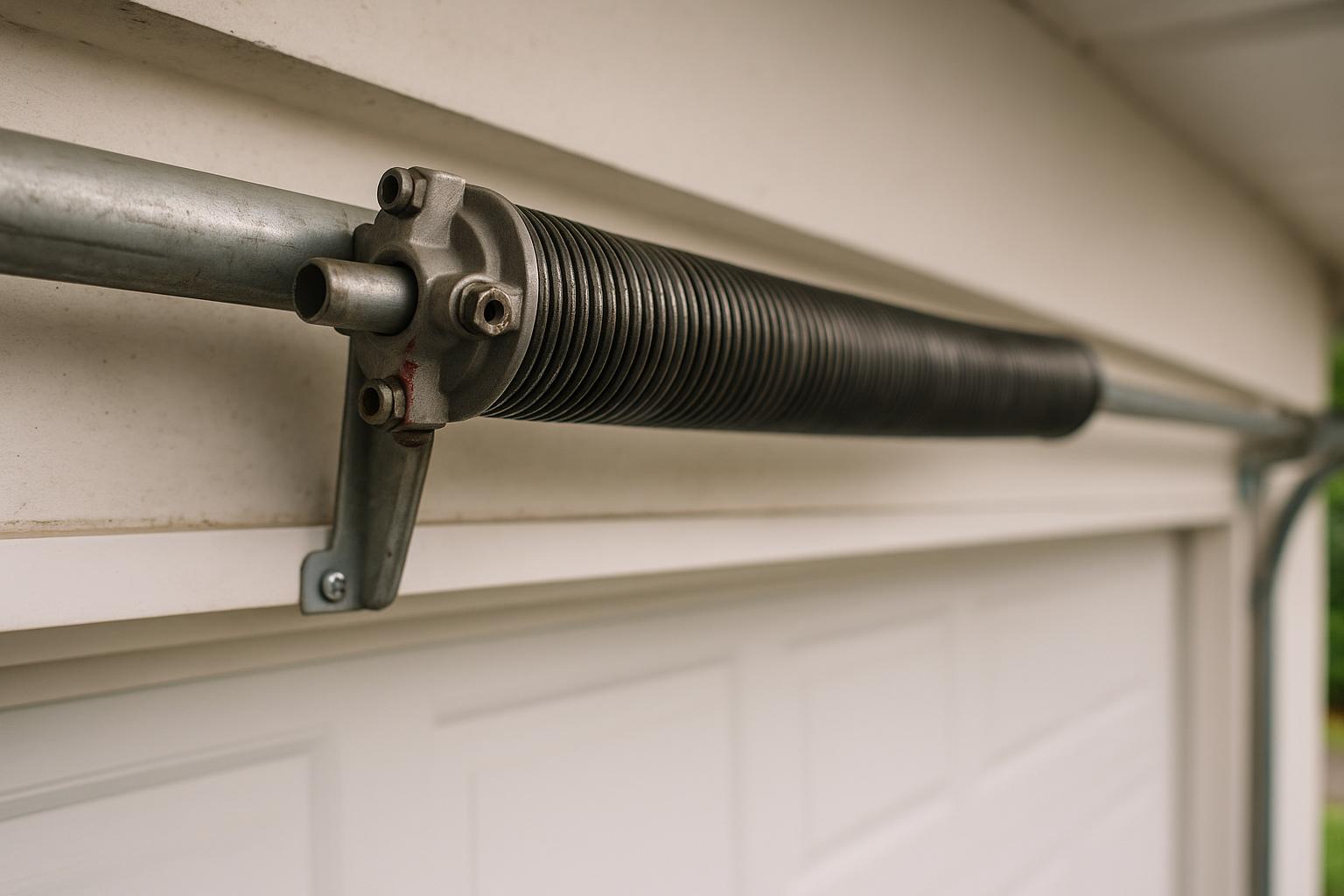
- Torsion springs — These are mounted on a metal shaft directly above the garage door opening. They twist and unwind to raise and lower the door. Torsion springs are the more common type in modern installations and tend to last longer.
- Extension springs — These run along the horizontal tracks on either side of the door. They stretch and contract as the door moves. Extension springs are more common on older homes and lighter doors.
Both types have a limited lifespan, typically measured in cycles. One cycle equals one full open and close. Most standard springs are rated for around 10,000 cycles, which translates to roughly 7 to 10 years of average use.
7 Warning Signs Your Garage Door Springs Are Failing
1. The Door Feels Unusually Heavy
Try disconnecting your garage door opener by pulling the emergency release cord, then manually lift the door. If it feels significantly heavier than it used to, your springs are losing tension. A properly balanced door should lift with minimal effort and stay open about three to four feet off the ground without support.
2. The Door Opens Unevenly or Crooked
If one side of your garage door rises faster than the other, it's often a sign that one spring has weakened or broken while the other is still functional. This is especially common with extension spring systems that use a separate spring on each side. An uneven door puts stress on the tracks, rollers, and opener, leading to more expensive repairs down the road.
3. You Hear a Loud Bang From the Garage
A sudden, loud bang — almost like a gunshot — coming from your garage is one of the most unmistakable signs of a broken torsion spring. When a spring snaps, the rapid release of tension creates a startling noise. Many Virginia Beach homeowners have called us thinking someone broke into their garage, only to discover a broken spring coiled loosely above the door.
4. There's a Visible Gap in the Torsion Spring
Take a look at the spring mounted above your garage door. If you see a gap of a few inches where the coils have separated, the spring has broken. This is a clear visual indicator that replacement is needed immediately. Do not attempt to operate the door.
5. The Opener Struggles or Stops Working
Your garage door opener is designed to work in partnership with the springs. When springs fail, the opener has to compensate for the full weight of the door. You might notice the motor straining, the door only opening partway, or the opener shutting off entirely. Running the opener with broken springs can burn out the motor, turning a spring replacement into a much costlier repair.
6. The Door Slams Shut Quickly
Healthy springs control the speed at which your door closes. If your garage door drops faster than normal or slams to the ground, the springs aren't providing adequate counterbalance. This is a serious safety hazard, especially in homes with children or pets.
7. You Notice Rust or Wear on the Springs
Virginia Beach's coastal climate means higher humidity and salt air exposure, which accelerates rust on metal components. Corroded springs lose their elasticity faster and are more prone to snapping without warning. If you see visible rust, pitting, or wear on your springs, it's worth having them inspected even if the door still seems to work fine.
Why You Should Never Replace Garage Door Springs Yourself
We understand the DIY spirit — and there are plenty of garage door maintenance tasks homeowners can safely handle, like lubricating moving parts or tightening hardware. Spring replacement is not one of them.
Garage door springs are under extreme tension. A torsion spring that releases unexpectedly can cause severe injury or even death. Professional technicians use specialized tools and have the training to safely remove and install springs. The risk simply isn't worth the savings.
At Virginia Beach Garage Door Pro, our technicians handle spring replacements every day. We carry a full inventory of springs on our service trucks, so most replacements are completed in a single visit — usually in under an hour.
How Long Do Replacement Springs Last?
Standard springs are rated for approximately 10,000 cycles. However, we also offer high-cycle springs rated for 25,000 or even 50,000 cycles. While they cost more upfront, high-cycle springs can last 20 years or more and are a smart investment for homeowners who plan to stay in their home long-term.
We also recommend having both springs replaced at the same time, even if only one has broken. Springs installed at the same time wear at roughly the same rate, so if one has failed, the other is likely close behind. Replacing both saves you from paying for a second service call in a few months.
Maintenance Tips to Extend Spring Life
A little preventive care goes a long way toward getting the most out of your garage door springs:
- Lubricate springs twice a year — Use a silicone-based or white lithium spray on the coils. This reduces friction and helps prevent rust, which is especially important in our Hampton Roads coastal environment.
- Schedule annual inspections — A professional tune-up can catch early signs of wear before a spring fails unexpectedly.
- Keep the door balanced — If your door isn't balanced properly, the springs work harder than they need to. A technician can adjust the tension during a maintenance visit.
- Address other issues promptly — Worn rollers, bent tracks, and misaligned hardware all put extra strain on your springs.
Don't Wait for a Complete Failure
A broken garage door spring always seems to happen at the worst possible time — when you're running late for work, loading up for a weekend trip, or dealing with an incoming storm. If you've noticed any of the warning signs above, the best time to address it is now, before you're stranded with a door that won't open.
Virginia Beach Garage Door Pro offers fast, reliable spring replacement across Virginia Beach, Norfolk, Chesapeake, and the entire Hampton Roads region. We provide upfront pricing with no hidden fees, and our emergency service is available when you need us most. Give us a call and let us take care of the heavy lifting — so your garage door can get back to doing its job.